,»»»»»»»»»»≡»≡≡»»≡«≡≡≡╔╔╔╔╔╔╔╔╔╔╔╔╔╔,
!░░│¡░░░░░░░░░░░░░░░░░░░░░░░░░░░░░░▒╠
!░!)φ▒▒▒▒▒▒▒▒▒▒▒▒▒▒▒▒▒▒▒▒▒▒▒▒▒▒╠╠░░▒╠
]░░╟╣▓▓▓▓▓▓▓▓▓▓▓▓▓▓▓▓▓▓▓▓▓▓▓▓▓██▒]░▒╠
]░░╟╣▓╬╬╬╬╬╬╬╬╬╬╬╬╬╬╬╬╬╣▓▓▓▓▓▓▓█▒]▒▒╡
]░░╟╣▓╬╬╬╬╬╬╬╬╬╬╬╬╬╬╣╣╣▓▓▓▓▓▓▓▓▓▒▐▒▒╡
]░░╟╣▓╬╬╬╬╬╬╬╬╬╬╬╬╬╣╣▓▓▓▓▓▓▓▓▓▓█▒▐▒▒╡
]░░╟╣▓╣╬╬╬╬╬╣╬╣╣╣╣╣▓▓▓▓▓▓▓▓▓▓▓██▒▐▒╠╡
[░░╟╣▓▓▓╣╣╣╣╣▓╣▓▓▓▓▓▓▓▓▓▓▓▓▓▓███▒▐▒╠╡
[░░╟╣▓▓▓▓▓▓▓▓▓▓▓▓▓▓▓▓▓▓▓▓▓▓▓████▒▐▒╠╡
]░░╟╣█▓▓▓▓▓▓▓▓▓▓▓▓▓▓▓▓▓▓▓▓▓█████▒▐▒╠╡
[░░╟╣█▓▓▓▓▓▓▓▓▓▓▓▓▓▓▓▓▓▓████████⌐▐╠╠╡
[░░╚╙└└└└└└└╙╙╙╙╙╙╙╙╙╙╙╙╙╙╙╙╙╙╙╙ ▐╠╠╡
[░░░░▒▒▒▒▒▒▒▒▒▒▒▒▒▒▒▒▒▒▒▒▒▒▒▒▒▒▒▒╠▒▒╡
[░░░░░░░░░░░░░░░░░░░░░░░░▒▒▒░▒▒▒▒▒▒▒╡
[░░░░░░░░░░░░░░░░░░░░░░▒▒▒▒▒▒▒▒▒▒▒▒╠╡
Γ░░ΓΓΓΓ░╚╚╚░╚╚╚╚╚╚▀▀▀▀▀▀▀▀▀▀▀▀▀▀╬╠╠╠Γ
[░░░░░░░░░░░░░░░░░░░░░░░▒▒▒▒▒▒▒▒▒▒╠╠╡
φ░░░░░░░░░░░░░░░░░░░░░▒▒▒▒▒▒▒▒▒▒╠╠╠╠╡
▐░░░░░░░░░░░░░░░░░░░▒▒▒▒▒▒▒▒▒▒▒▒▒╠╠╠Γ
]╠╬╬╬╬╬╬╬╬╬╬╬╬╬╬╬╬╬╬╬╬╬╬╬╬╬╬╬╬╬╬╬╬╬╬⌐
_____]╚╠╣╣╣╣╣▓▓▓▓▓▓▓▓▓▓▓▓▓▓▓▓▓▓▓▓▓▓▓▓▓▓▓▓⌐____
_ⁿƒⁿ╙]M░ƒ∩░%∩░╔∩░╔∩⌐≤░░╦ƒ░MƒƒM5²MδƒMΘφM░j∩>⌐%^^(φƒ╕░ƒ╕░ƒp░░Q░
.7DDφ≥▒5≥▒φ≥▒δUΓφ7Γê≤Üê5Üφ5Üδ≤Üê5▒φ╠▒φ╠⌂Då░5╠░_▐"S║"S║"▒║""Å░"ⁿⁿ-.,
. ≈╚╚╚╚δ╚╚δδδ╚╚╚╚╚╚╚╚╚╚╚╚╚╚╚╚╚╚╚╚╚╚W╚╚⌐╚╚W╚╚⌐╚╚Ü.-W╚╚╚╚╚ë╚╚ë╚╚Θ░ __`-
=Q░░░░░░░░░░░░░░░░░░░░░░▒▒░▒▒▒▒▒▒▒▒▒▒▒▒▒▒▒▒▒▒▒▒▒▒▒▒▒▒▒▒▒▒▒▒▒╝
!░░│¡░░░░░░░░░░░░░░░░░░░░░░░░░░░░░░▒╠
!░!)φ▒▒▒▒▒▒▒▒▒▒▒▒▒▒▒▒▒▒▒▒▒▒▒▒▒▒╠╠░░▒╠
]░░╟╣▓▓▓▓▓▓▓▓▓▓▓▓▓▓▓▓▓▓▓▓▓▓▓▓▓██▒]░▒╠
]░░╟╣▓╬╬╬╬╬╬╬╬╬╬╬╬╬╬╬╬╬╣▓▓▓▓▓▓▓█▒]▒▒╡
]░░╟╣▓╬╬╬╬╬╬╬╬╬╬╬╬╬╬╣╣╣▓▓▓▓▓▓▓▓▓▒▐▒▒╡
]░░╟╣▓╬╬╬╬╬╬╬╬╬╬╬╬╬╣╣▓▓▓▓▓▓▓▓▓▓█▒▐▒▒╡
]░░╟╣▓╣╬╬╬╬╬╣╬╣╣╣╣╣▓▓▓▓▓▓▓▓▓▓▓██▒▐▒╠╡
[░░╟╣▓▓▓╣╣╣╣╣▓╣▓▓▓▓▓▓▓▓▓▓▓▓▓▓███▒▐▒╠╡
[░░╟╣▓▓▓▓▓▓▓▓▓▓▓▓▓▓▓▓▓▓▓▓▓▓▓████▒▐▒╠╡
]░░╟╣█▓▓▓▓▓▓▓▓▓▓▓▓▓▓▓▓▓▓▓▓▓█████▒▐▒╠╡
[░░╟╣█▓▓▓▓▓▓▓▓▓▓▓▓▓▓▓▓▓▓████████⌐▐╠╠╡
[░░╚╙└└└└└└└╙╙╙╙╙╙╙╙╙╙╙╙╙╙╙╙╙╙╙╙ ▐╠╠╡
[░░░░▒▒▒▒▒▒▒▒▒▒▒▒▒▒▒▒▒▒▒▒▒▒▒▒▒▒▒▒╠▒▒╡
[░░░░░░░░░░░░░░░░░░░░░░░░▒▒▒░▒▒▒▒▒▒▒╡
[░░░░░░░░░░░░░░░░░░░░░░▒▒▒▒▒▒▒▒▒▒▒▒╠╡
Γ░░ΓΓΓΓ░╚╚╚░╚╚╚╚╚╚▀▀▀▀▀▀▀▀▀▀▀▀▀▀╬╠╠╠Γ
[░░░░░░░░░░░░░░░░░░░░░░░▒▒▒▒▒▒▒▒▒▒╠╠╡
φ░░░░░░░░░░░░░░░░░░░░░▒▒▒▒▒▒▒▒▒▒╠╠╠╠╡
▐░░░░░░░░░░░░░░░░░░░▒▒▒▒▒▒▒▒▒▒▒▒▒╠╠╠Γ
]╠╬╬╬╬╬╬╬╬╬╬╬╬╬╬╬╬╬╬╬╬╬╬╬╬╬╬╬╬╬╬╬╬╬╬⌐
_____]╚╠╣╣╣╣╣▓▓▓▓▓▓▓▓▓▓▓▓▓▓▓▓▓▓▓▓▓▓▓▓▓▓▓▓⌐____
_ⁿƒⁿ╙]M░ƒ∩░%∩░╔∩░╔∩⌐≤░░╦ƒ░MƒƒM5²MδƒMΘφM░j∩>⌐%^^(φƒ╕░ƒ╕░ƒp░░Q░
.7DDφ≥▒5≥▒φ≥▒δUΓφ7Γê≤Üê5Üφ5Üδ≤Üê5▒φ╠▒φ╠⌂Då░5╠░_▐"S║"S║"▒║""Å░"ⁿⁿ-.,
. ≈╚╚╚╚δ╚╚δδδ╚╚╚╚╚╚╚╚╚╚╚╚╚╚╚╚╚╚╚╚╚╚W╚╚⌐╚╚W╚╚⌐╚╚Ü.-W╚╚╚╚╚ë╚╚ë╚╚Θ░ __`-
=Q░░░░░░░░░░░░░░░░░░░░░░▒▒░▒▒▒▒▒▒▒▒▒▒▒▒▒▒▒▒▒▒▒▒▒▒▒▒▒▒▒▒▒▒▒▒▒╝
Plain Text Nostr
My latest project is live at plaintextnostr.com.
I wanted a reader that felt quick and looked simple. plaintextsports.com was the reference I had in mind. I just wanted a nostr client like that... with the ability to render threads like twitter or reddit.
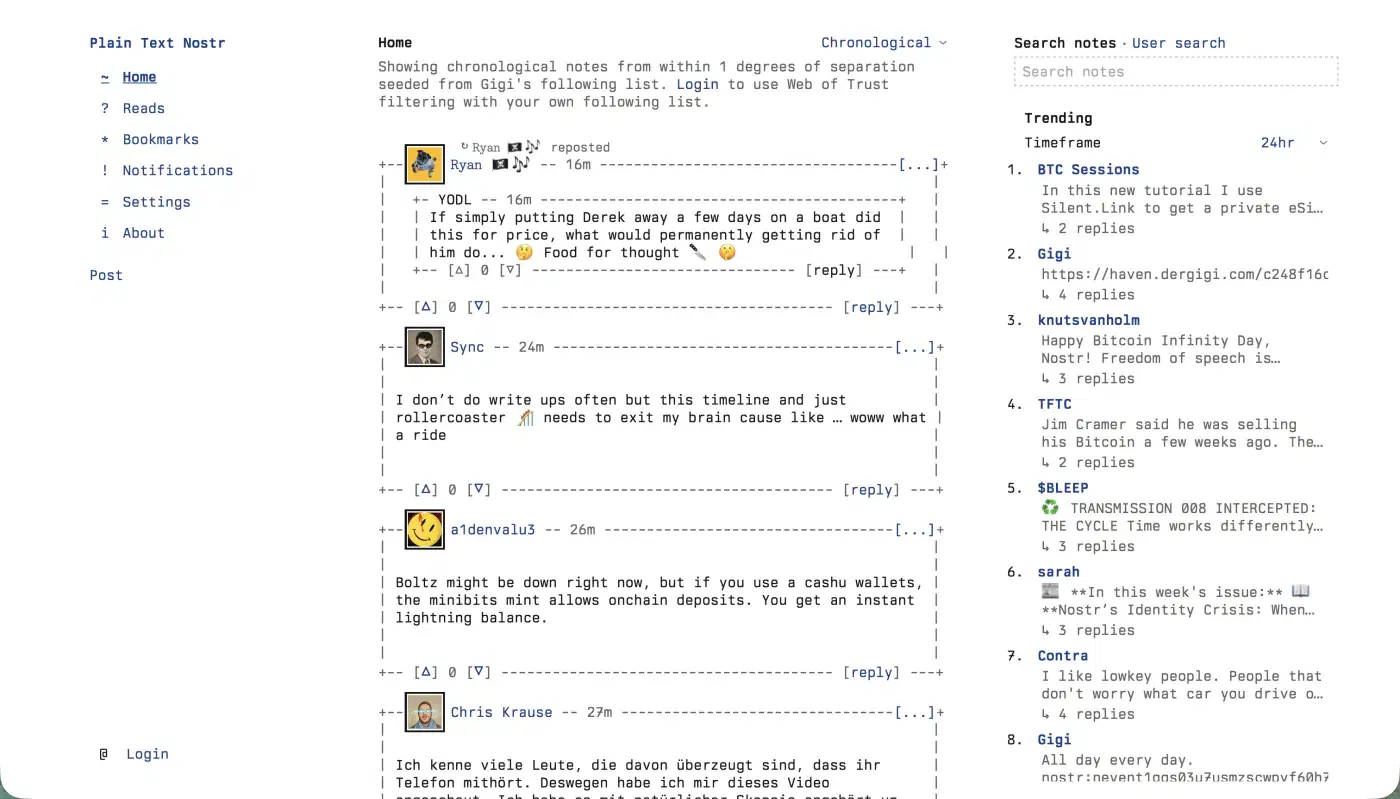
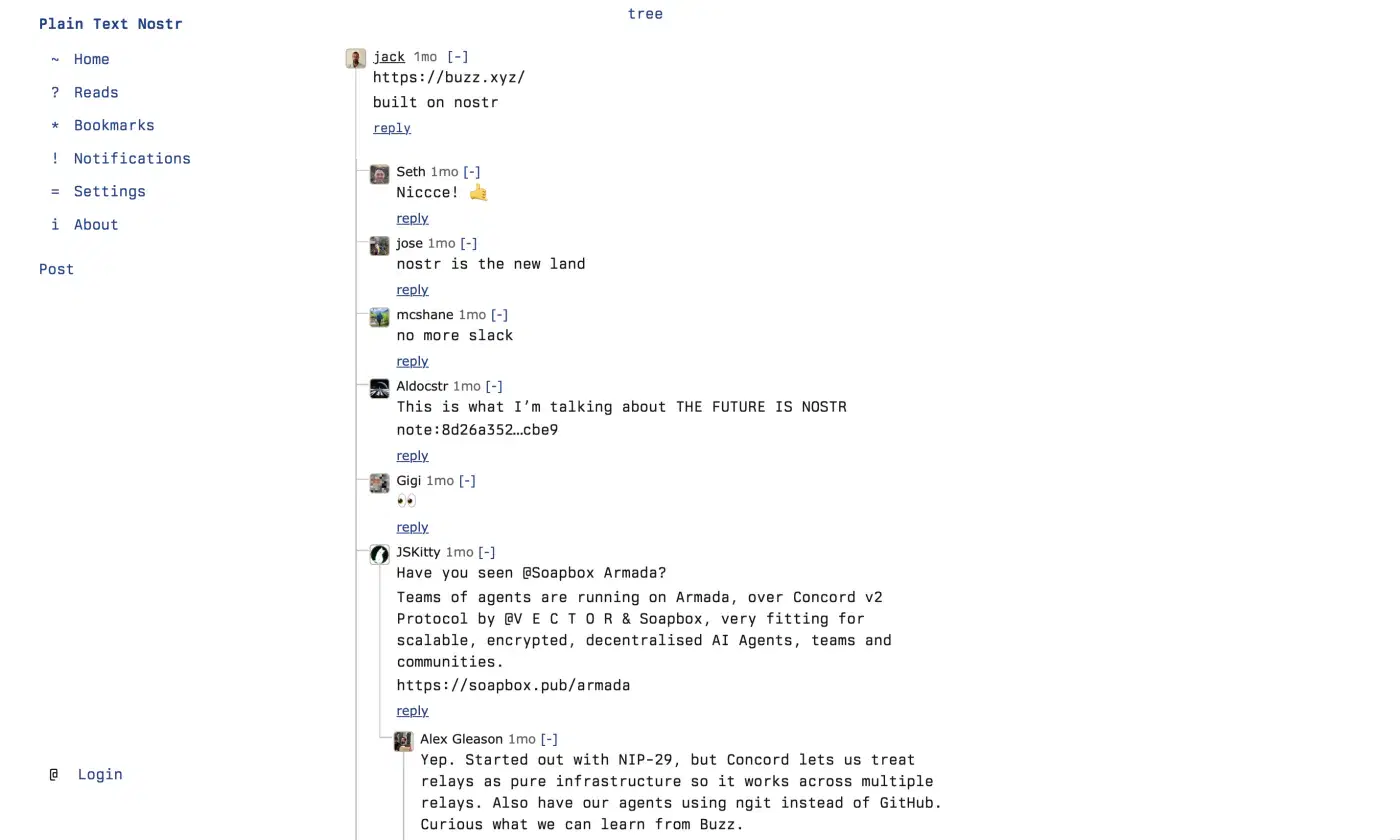
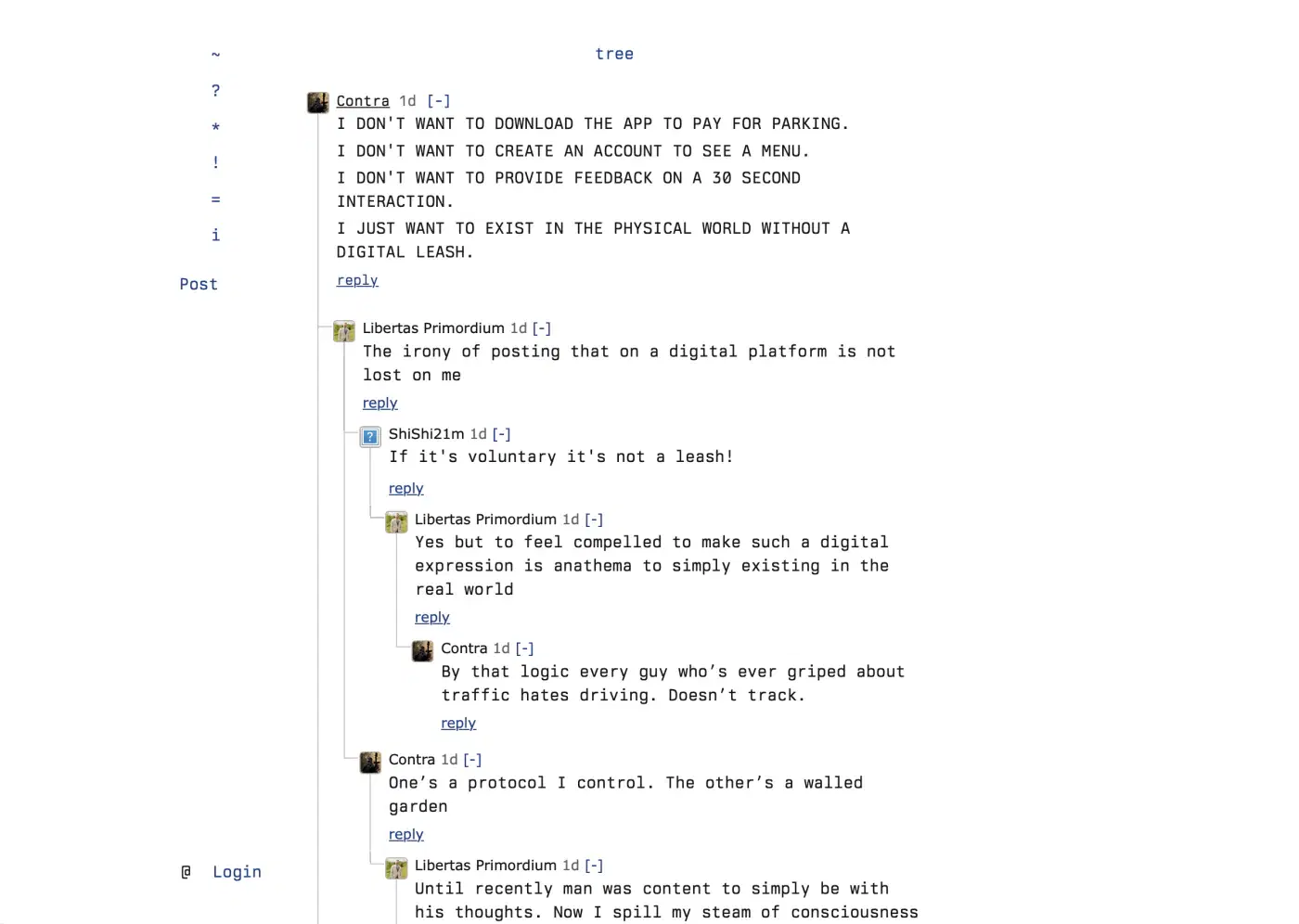
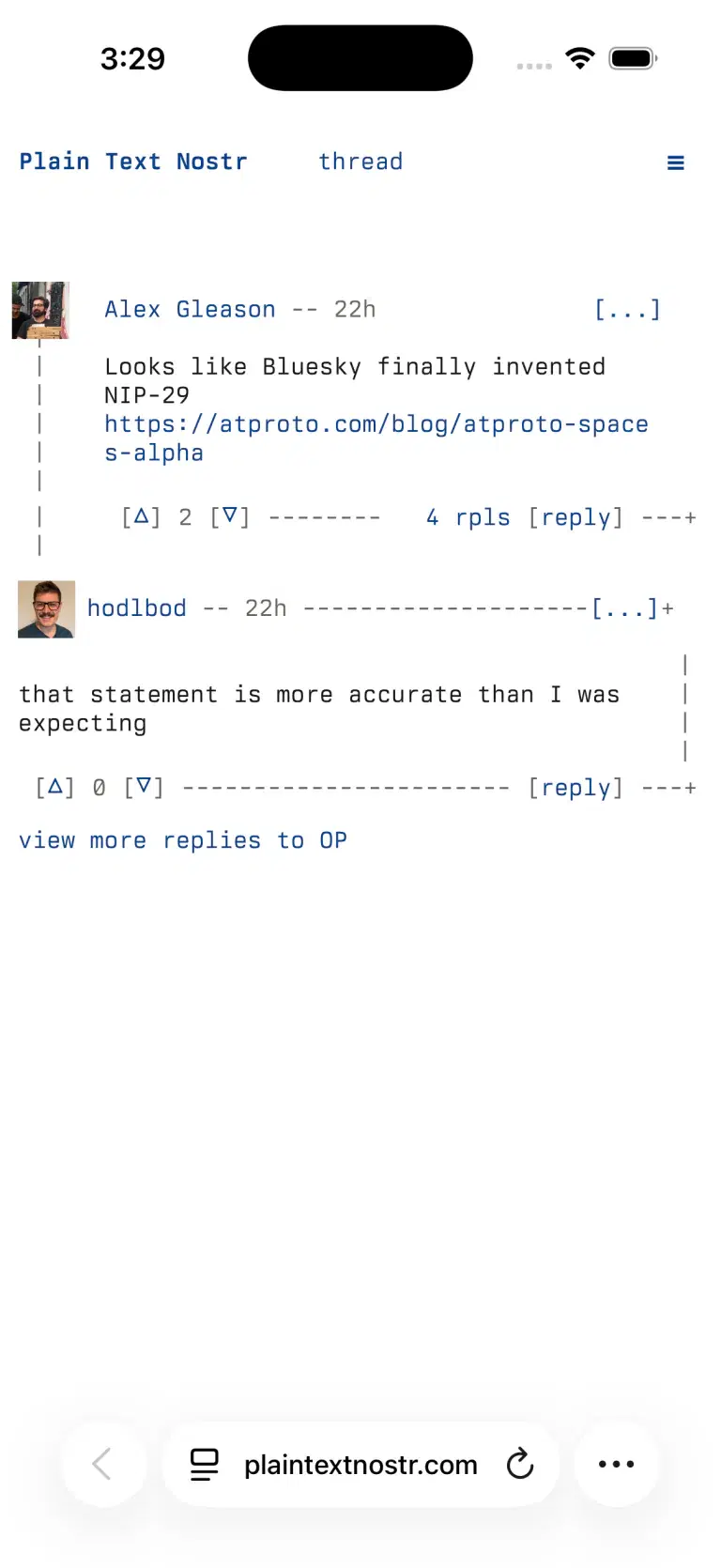
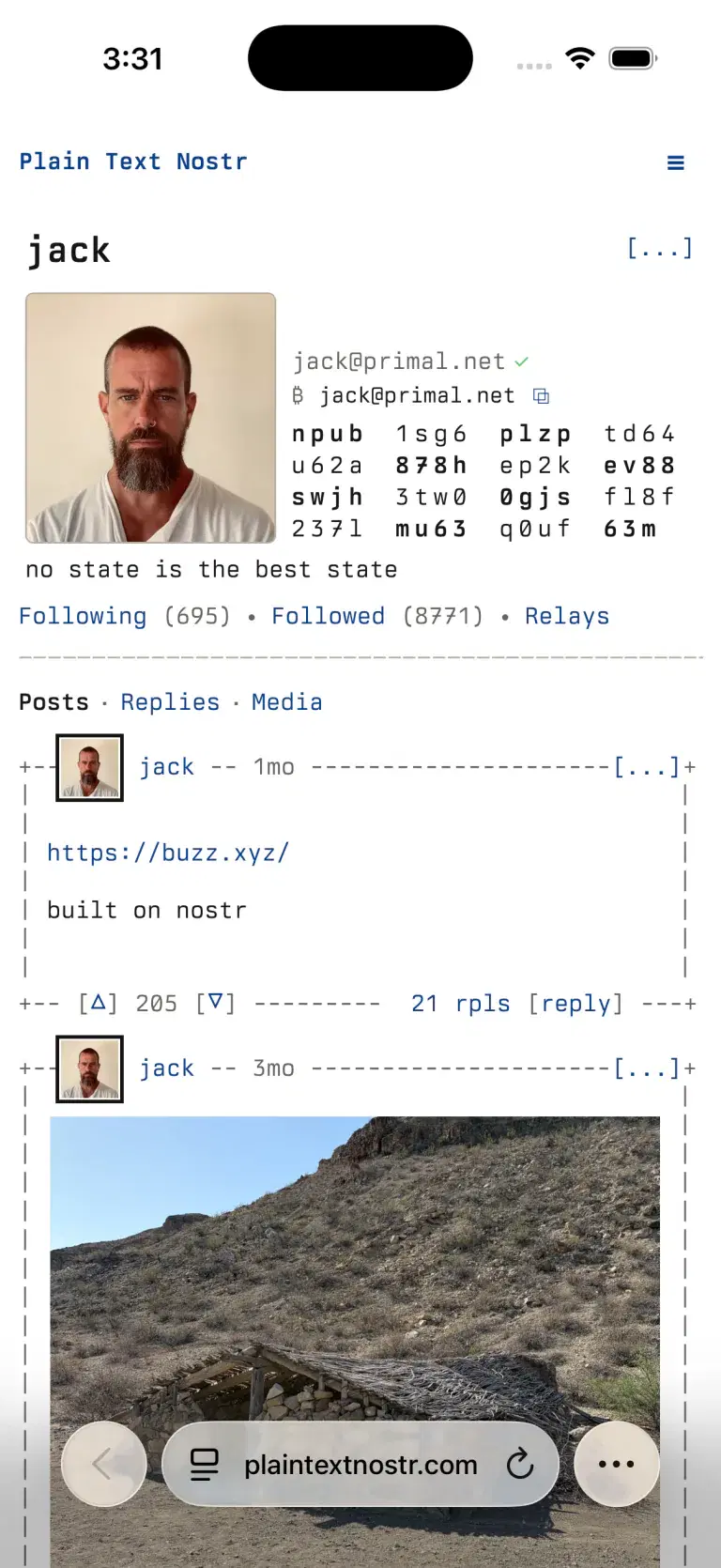
The web feed and tree views, with the same spare interface carried over to iPhone.